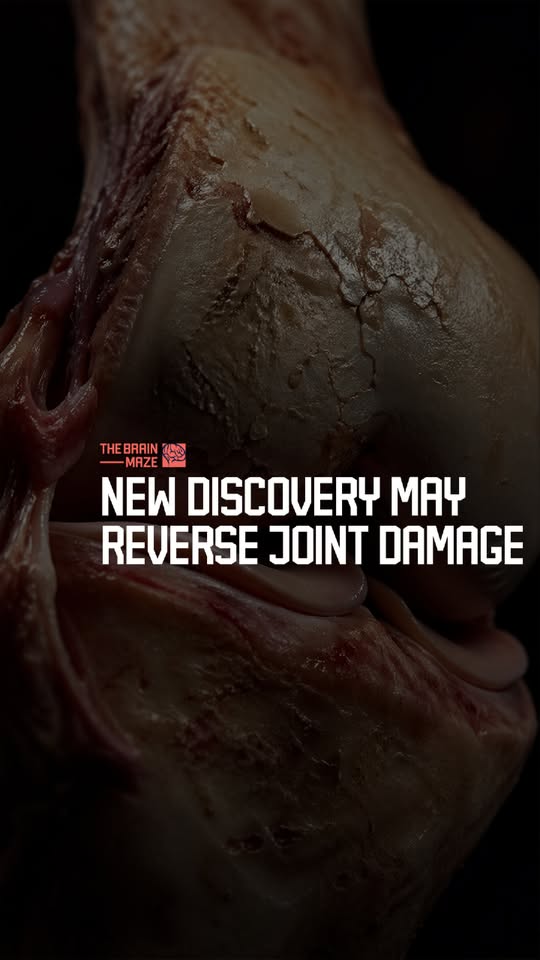
Chris sent a Facebook Reel from The Brain Maze titled “New Discovery May Reverse Joint Damage.” This one is more grounded than many miracle-health clips: the core claim points to a real 2026 paper in Science on inhibiting 15-hydroxy prostaglandin dehydrogenase, usually shortened to 15-PGDH. But the Managing Expectations version is still careful: promising cartilage-regeneration research is not the same as an approved treatment that reverses osteoarthritis in patients today.
Medical caution
This article is public-interest source review, not medical advice, diagnosis, treatment guidance, drug guidance, supplement guidance, or a recommendation to pursue experimental osteoarthritis treatment. Joint pain, osteoarthritis and surgical decisions belong with qualified clinicians.
What the Reel claims
The automatic caption transcript says a protein called 15-PGDH increases with age and blocks cartilage repair. It says Stanford researchers found that blocking this protein in older mice allowed damaged cartilage to regenerate and become more like healthy tissue. It also says existing cartilage cells shifted into a more active repair state, movement improved, pain was reduced, and similar regenerative effects were seen in human tissue samples.
The Reel’s most aggressive phrase is the headline idea: “reverse joint damage.” That may be a fair shorthand for what the lab paper is exploring, but it needs a warning label when ordinary viewers hear it as “arthritis can now be cured.”
What was verified
The primary scientific anchor is real:
- Paper: “Inhibition of 15-hydroxy prostaglandin dehydrogenase promotes cartilage regeneration.”
- Journal: Science, 2026.
- PMID: 41308124.
- DOI: 10.1126/science.adx6649.
The PubMed abstract supports the broad outline of the Reel. It says 15-PGDH expression increased in aged or injured mouse articular cartilage; systemic and local inhibition with a small-molecule inhibitor led to articular-cartilage regeneration and reduction in osteoarthritis-associated pain; and the regeneration appeared to occur through gene-expression changes in preexisting chondrocytes rather than through stem or progenitor cell proliferation.
Why that matters
Osteoarthritis is usually described publicly as a wear-and-tear condition managed with weight, exercise, pain control, injections, physiotherapy and eventually surgery when severe. A disease-modifying treatment that actually restores cartilage would be a major shift.
The interesting part of the 15-PGDH paper is not just “less pain.” It is the possibility that existing cartilage cells can be pushed toward a more matrix-building, repair-oriented state. That is why the claim belongs in the Managing Expectations health library: there is a real paper, a real mechanism, and a real reason people are excited.
What is still not proven
The hard part is translation. A result in mice, tissue models or controlled experimental systems does not automatically become a safe, available human therapy. Human osteoarthritis is not one uniform problem. It varies by joint, age, injury history, inflammation, mechanics, weight, genetics, cartilage loss, bone changes and disease stage.
Even if 15-PGDH inhibition continues to look promising, the clinical questions still include delivery, dosing, durability, safety, off-target effects, patient selection, whether advanced disease responds, and whether cartilage changes translate into meaningful long-term function.
Evidence labels
- Verified: The Facebook Reel exists and was posted by The Brain Maze under the “New Discovery May Reverse Joint Damage” title.
- Verified: A 2026 Science paper reports that inhibiting 15-PGDH promoted cartilage regeneration and reduced osteoarthritis-associated pain in the studied models.
- Reasonable but careful: This is promising disease-modifying osteoarthritis research.
- Too strong for the public: “Joint damage can now be reversed” if that is heard as an available treatment for patients.
- Not established: A routine approved human treatment that eliminates the need for joint replacement or reverses osteoarthritis broadly.
Primary links
- Facebook Reel: The Brain Maze — New Discovery May Reverse Joint Damage
- Science 2026: Inhibition of 15-hydroxy prostaglandin dehydrogenase promotes cartilage regeneration
- DOI: 10.1126/science.adx6649
- Related background: 2020 Nature Medicine paper on activated skeletal stem cells and articular cartilage regeneration
- Local source note, transcript and metadata trail
Bottom line
The Reel is pointing at real science. The best short version is: 15-PGDH inhibition is a promising cartilage-regeneration research path for osteoarthritis, backed by a 2026 Science paper, but it is not yet a public cure or routine clinical treatment.
Health Papers, Studies & Films
Continue the source library for health papers, studies, documentaries, interviews, and medical controversies.
Back to Health Section