Energy / SMRs / Uranium / Data Centers
India, Saudi Arabia and the SMR Energy Watch
A Mining.com lead on India’s SMR plans and a U.S.–Saudi nuclear cooperation agreement is more than an energy-policy item. It is a mining, uranium, industrial-heat and data-center power story.
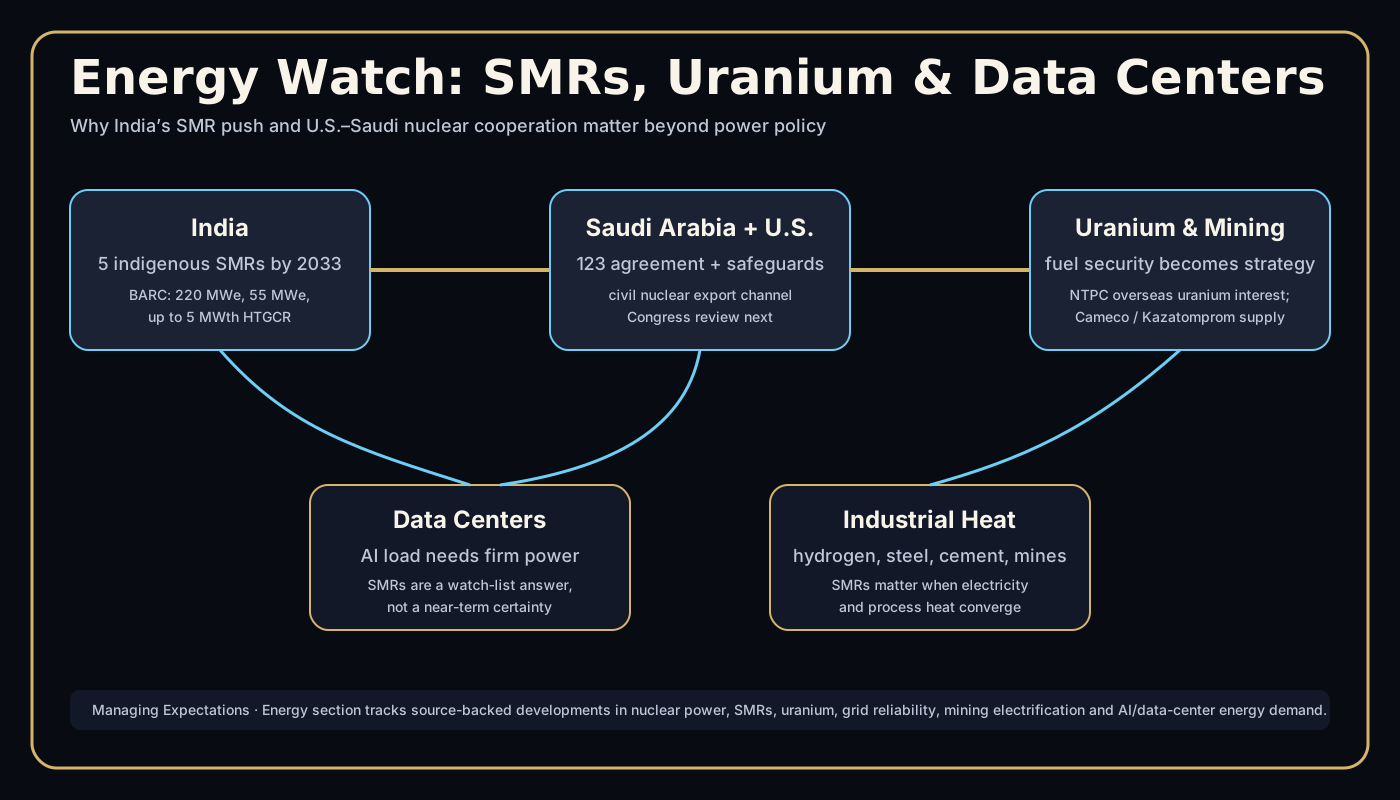
Short version
India’s official Nuclear Energy Mission is aiming for 100 GWe of nuclear capacity by 2047 and at least five indigenous SMRs by 2033. BARC is developing a 220 MWe Bharat Small Modular Reactor, a 55 MWe SMR and an up-to-5 MWth high-temperature gas-cooled reactor for hydrogen production. Separately, the U.S. Department of Energy says the United States and Saudi Arabia signed a peaceful nuclear cooperation agreement and safeguards agreement, now headed to Congress for review.
The Energy section will track these developments because SMRs sit at the crossroads of firm low-carbon power, uranium supply, mine electrification, industrial heat and the electricity demand created by AI/data centers. The disciplined takeaway is not “SMRs solved it.” The takeaway is that nuclear supply chains are moving from abstract climate debate into industrial strategy.
What is confirmed
India’s SMR target
PIB says the Nuclear Energy Mission aims to develop and operationalise at least five indigenous SMRs by 2033.
India’s nuclear scale target
PIB says the mission targets 100 GWe nuclear capacity by 2047, with present capacity around 8.78 GW and a roadmap to about 22 GW by 2031–32.
BARC designs
PIB identifies three designs: BSMR-200, SMR-55 and an up-to-5 MWth HTGCR for hydrogen production.
U.S.–Saudi cooperation
DOE says a 123 agreement and accompanying safeguards agreement lay the legal foundation for a civil nuclear partnership and will be transmitted to Congress.
Why it matters for mining
Fuel security becomes a board-level issue when nuclear targets become real capacity plans. The Mining.com lead connects India’s SMR ambition to overseas uranium interest, Cameco supply and Kazatomprom output. For miners, the watch-list is not just uranium price. It is permitting, enrichment/fuel services, reactor manufacturing, construction inputs, grid access and the possibility of mine-site or industrial-zone captive power.
Why it matters for data centers
AI/data-center growth is forcing large power buyers to look for reliable, round-the-clock electricity. The IEA’s Energy and AI work frames the issue plainly: there is no AI without electricity for data centres. SMRs are one candidate answer because they could, in theory, offer firm power in smaller blocks. But licensing, cost, construction schedule, fuel availability and public acceptance still decide whether they become real data-center infrastructure.
What to watch next
- India: SHANTI Act implementation rules, private-sector participation, BARC lead-unit milestones at Tarapur/Vizag, uranium supply contracts and NTPC nuclear moves.
- Saudi Arabia: congressional review of the 123 agreement, non-proliferation safeguards, reactor vendor selection and whether AP1000 or other large-reactor plans move from diplomacy to procurement.
- North America: data-center nuclear PPAs, SMR licensing progress, uranium supply-chain security and grid reliability policy.
- Mining: uranium projects, fuel-cycle bottlenecks, mine electrification and industrial heat applications for hydrogen, steel, cement and remote operations.
Managing Expectations bottom line
This is the first Energy watch entry because it shows the theme clearly: the next energy cycle is not only about cheaper electrons. It is about who can deliver firm power at industrial scale, who controls the fuel chain, and which regions can support AI/data-center growth without breaking grids or emissions targets.
Source trail
- Mining.com lead article
- PIB: Nuclear Energy Mission for Viksit Bharat
- PIB: SMRs for clean and low-carbon energy
- PIB: India-U.S. private nuclear investment discussion
- DOE: U.S.–Saudi nuclear cooperation agreement
- World Nuclear Association: SMR explainer
- IEA: Energy and AI
- Local source note
- Structured source summary